Jätkäsaari Circular Economy Block
Jätkäsaari Circular Economy Block
Circular Economy Block – Sustainable Living for the Future
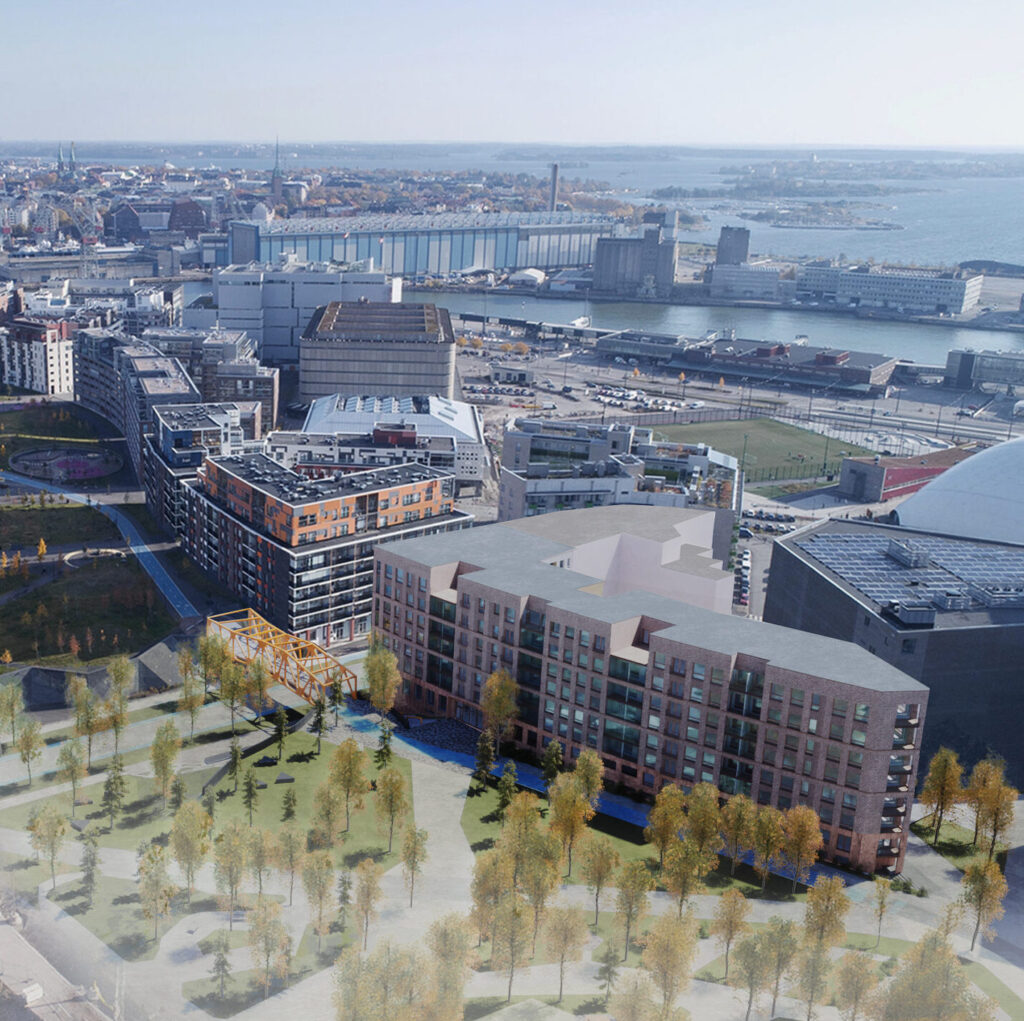
Yrjö and Hanna Foundation is currently developing the Circular Economy Block in Jätkäsaari, Helsinki. Our goal is to create a holistic residential environment where circular economy principles guide every stage of the project – from planning and construction to residents’ everyday lives.
The Circular Economy Block will include accessible rental apartments for seniors, right-of-occupancy homes for people of all ages, shared community spaces that encourage interaction and activities, commercial premises.
The project is part of the City of Helsinki’s Developing Apartment Buildings Programme, focusing on circular economy solutions during construction as well as affordable and scalable circular economy innovations.
The design-build contract is being carried out by YIT. Architectural design is provided by ARK-house Architects, while multidisciplinary engineering design is undertaken by A-Insinöörit. The project is scheduled for completion in spring 2028.

A New Way to Live
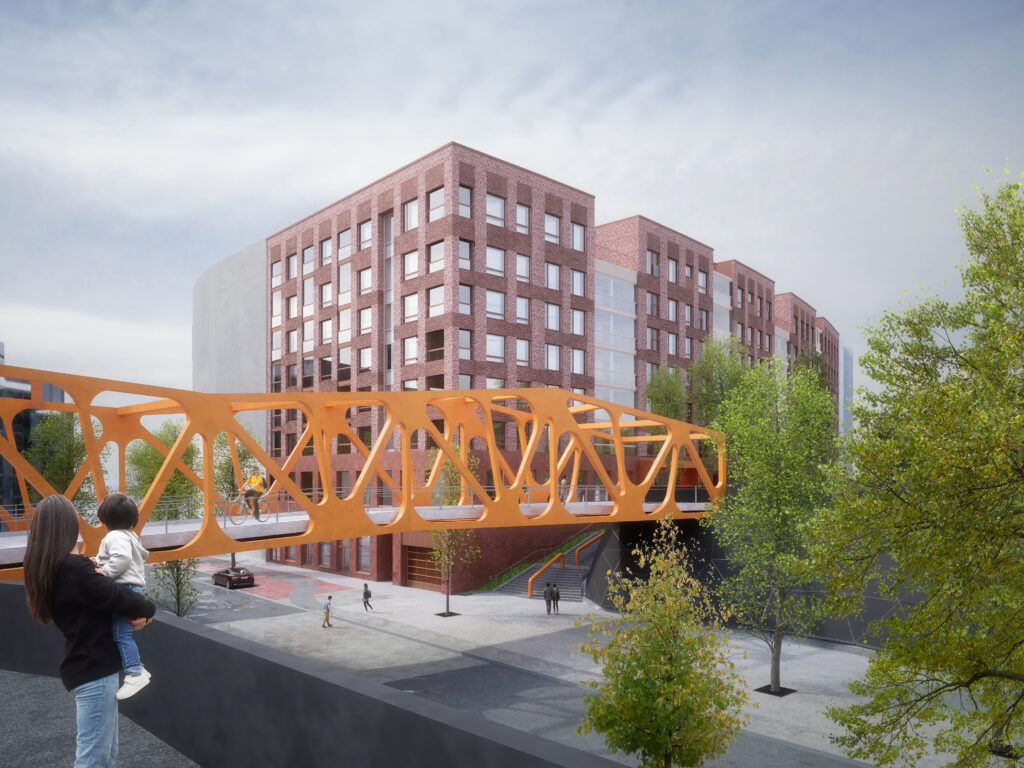
The Circular Economy Block will provide residents and the surrounding community with an inspiring, sustainable and community-oriented living environment. The development will include 84 accessible senior rental apartments and 70 right-of-occupancy homes designed for residents of all ages.
Indoor and outdoor shared spaces create natural opportunities for people to meet and connect. Community life grows from everyday encounters, shared activities and the freedom to participate in ways that suit each resident. The neighbourhood will evolve according to the interests, skills and wishes of the people who live there.
Residents will have access to a variety of shared facilities, including a community room, landscaped courtyard, exercise room, laundry facilities, stage stairs for events, and rooftop sauna facilities with terraces on the eighth floor. Mailboxes are also located adjacent to the communal spaces, making everyday encounters a natural part of daily life. These shared facilities extend residents’ living space and offer opportunities for hobbies, exercise, socialising and forming new friendships.
In addition to shared spaces, the development encourages a sharing economy. Residents can borrow, share and exchange items through dedicated recycling and sharing points.
Raised planting beds will enable urban gardening and community activities. Pollinator-friendly planting will enhance biodiversity while creating pleasant outdoor spaces. Rainwater collected on site will be used for irrigation, and green roofs will improve both biodiversity and stormwater management.
Community, shared resources and everyday connections
Building for a Sustainable Future
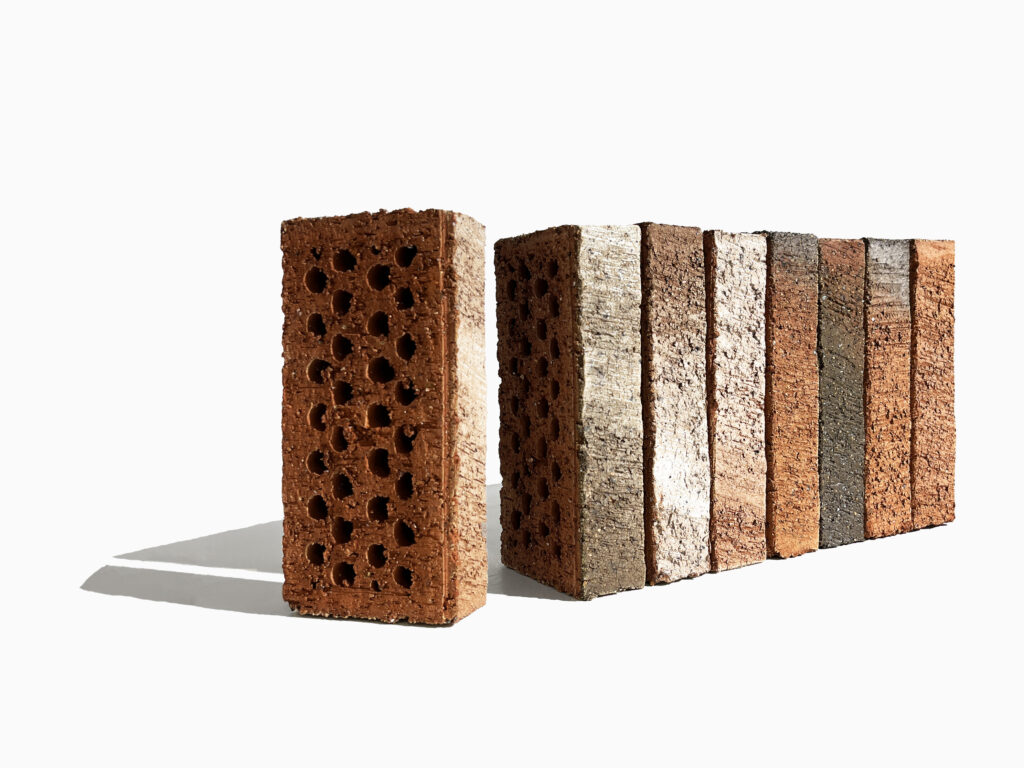
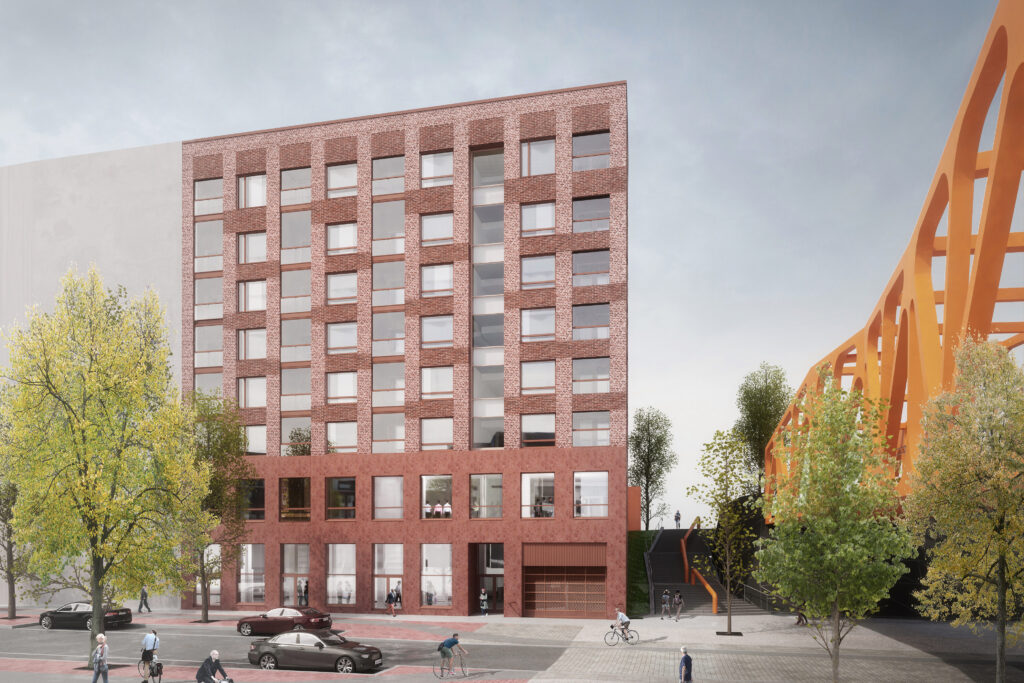
The architecture of the Circular Economy Block combines robust recycled materials and natural materials with contemporary design. The development is built according to circular economy principles by using durable, renewable and recycled materials wherever possible.
Buildings and spaces are designed to be adaptable so they can respond to changing needs over time. Building components are evaluated throughout their entire life cycle, with opportunities for future reuse and recycling considered already during the design phase. Particular attention has been paid to designing structures that can be dismantled efficiently, allowing building components to be reused in the future.
One of the project’s most distinctive innovations is the award-winning circular economy ceramic façade tile used on the exterior. Manufactured from 40% recycled materials, including recycled glass and sanitary porcelain, the solution was developed in collaboration with YIT, ARK-house Architects, A-Insinöörit, the Iittala Glass Factory and Wienerberger. It received the Central Chamber of Commerce’s Sustainability Act of the Year Award in 2024.
Existing construction materials are also given a new life. For example, recycled concrete aggregate (Betoroc) is used in concrete casting and ground fill, enabling valuable materials to remain in circulation rather than becoming waste.
The project is also developing new circular construction solutions, including sandwich façade elements designed with low-carbon materials, long service life and future recyclability in mind.
The construction site aims to achieve a 90% recycling rate, significantly exceeding the 70% minimum requirement of the EU Taxonomy for sustainable construction. In practice, this means that as much construction waste as possible will be reused or recycled.
Construction-related emissions are reduced by using renewable HVO fuel instead of fossil diesel in construction machinery and transport vehicles. Compared with conventional fuels, HVO significantly lowers greenhouse gas emissions.
Sustainability, renewability and adaptability
Renewable Energy
The Circular Economy Block’s energy solutions are based on renewable energy sources and high energy efficiency. The buildings are designed to achieve Energy Performance Class A.
Most of the heating energy will be produced using ground-source heat collected from boreholes reaching depths of up to 600 metres. Rooftop solar panels will generate part of the property’s electricity.
Smart energy management systems optimise energy consumption throughout the buildings. Residents will be able to monitor their own apartment’s energy use through an in-home display, while a digital display in the main lobby will present the energy performance of the entire property.
In the Circular Economy Block, circular economy principles continue long after construction is complete. They are reflected in the production, use and conservation of energy throughout everyday life.
Ground-source heat, solar energy and smart energy management
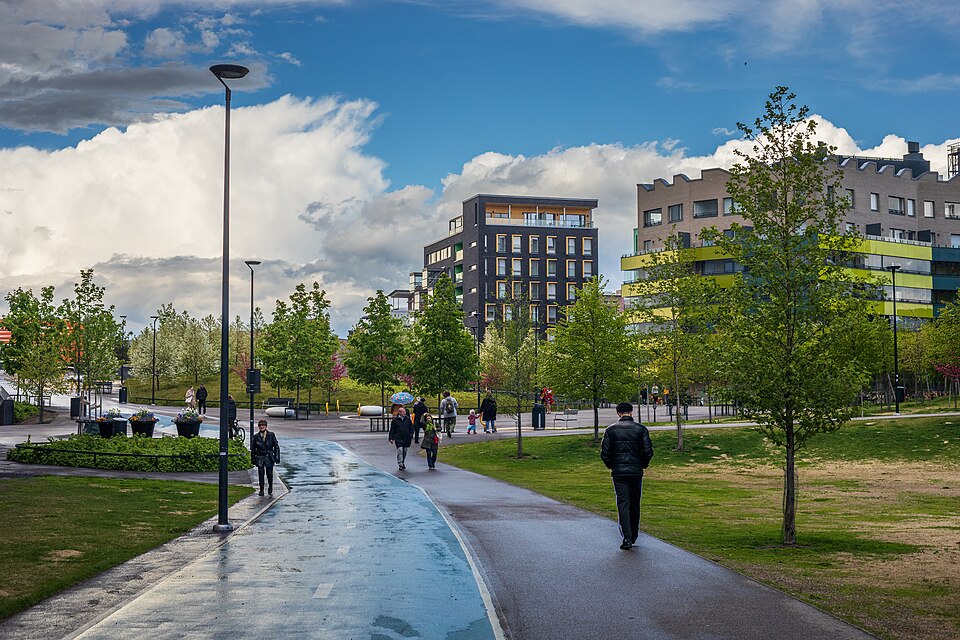
A Prime Location in One of Helsinki’s Most Attractive Districts
Jätkäsaari is one of Helsinki’s most vibrant and desirable residential districts. Its appeal lies in its exceptional seaside location, thoughtfully designed urban environment and wide range of services.
The Circular Economy Block is located just minutes from Helsinki city centre and the nearby district of Ruoholahti. From Ruoholahti Metro Station, residents enjoy convenient connections to both eastern Helsinki and Espoo. Tram lines 7, 8 and 9 serve the area, with the nearest stop located only about 300 metres away. The nearby Terminal also provides easy ferry connections to Tallinn.
Everyday life is enriched by local cafés, restaurants, shops and events. Essential services such as supermarkets, pharmacies and healthcare facilities are all within easy reach.
Green parks, playgrounds and waterfront walking routes encourage outdoor activities throughout the year. The district is home to several schools and daycare centres, with new facilities continuing to be developed as the neighbourhood grows.
Seaside living, urban convenience and excellent accessibility